- NEWS -
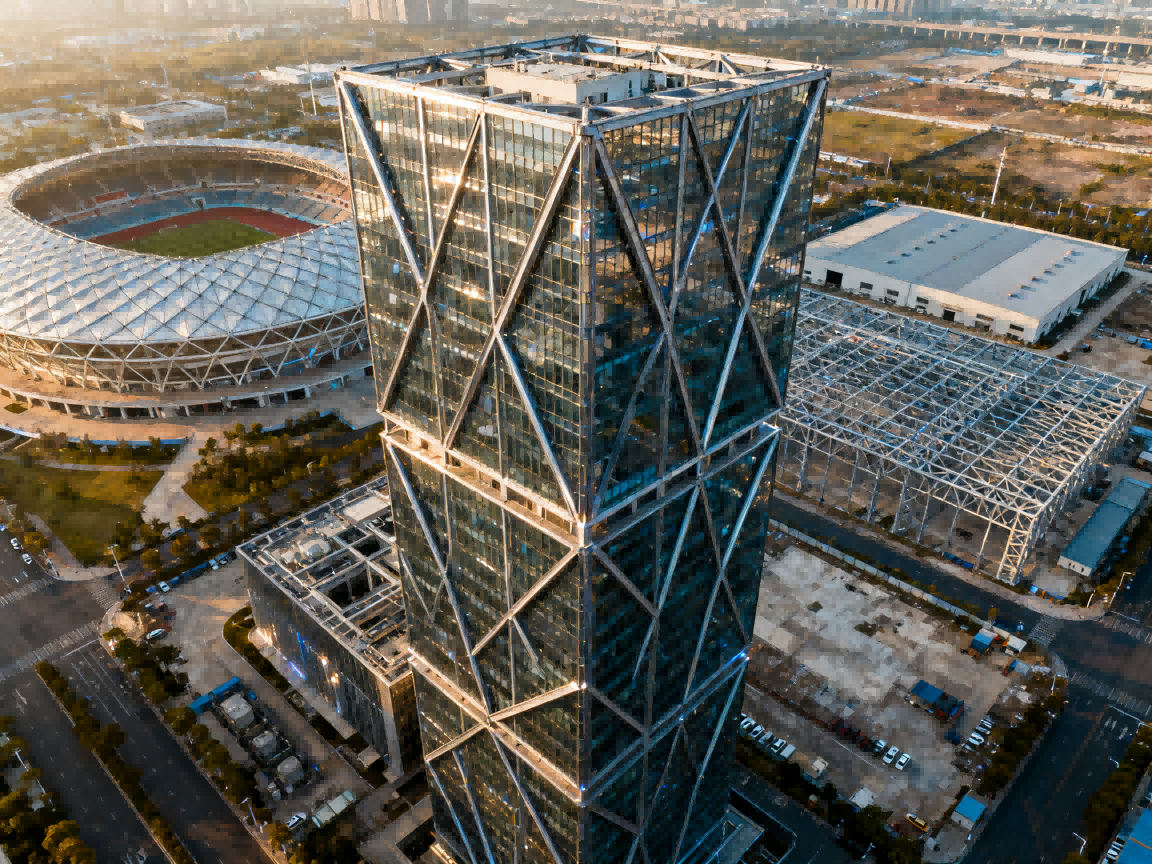
1. High-Rise and Super-Tall Buildings
These buildings represent the concentrated embodiment of steel structure technology.
Characteristics: The core tube (often reinforced concrete) works in synergy with a peripheral mega steel frame or bundled tube steel structure to resist horizontal wind loads and seismic forces. They offer flexible column grids, spacious interiors, and significantly shortened construction periods.
Typical Applications: Commercial office buildings, star-rated hotels, high-end apartments.
Trends & Cases: The recently completed "Future Tower" in Dubai (450m) utilizes an intelligent steel frame system with embedded sensors, enabling full lifecycle health monitoring.
2. Long-Span Spatial Structures
Focus on covering vast column-free spaces.
Characteristics: Utilize various structural forms like space grids, latticed shells, suspension cables, beam-string structures, and cable domes to achieve spans of hundreds of meters with lightweight steel members. They offer extremely high structural efficiency and strong visual expressiveness.
Typical Applications: Stadiums (e.g., Olympic venues), airport terminals, high-speed rail stations, large exhibition centers, theaters.
Trends & Cases: The newly built Smart Sports Center in Hangzhou (2024) features a flying swallow-type arched steel roof that uses robotically 3D-printed special nodes, achieving a unity of mechanics and aesthetics.
3. Industrial Plants and Warehousing Buildings
The most widespread and mature field for steel structure application.
Characteristics: Primarily use structural systems like portal frames and bent frames. They feature a high degree of standardization and can be flexibly adjusted in column grid and height based on process requirements. Construction is fast, facilitating future expansion and modification.
Typical Applications: Heavy industrial plants (e.g., metallurgy, power plants), light industrial workshops, logistics and storage centers, aircraft hangars.
Trends: Upgrading towards green and intelligent solutions. An increasing number of plants integrate photovoltaic steel roofs and employ prefabricated modular construction, significantly enhancing energy savings and carbon reduction.
4. Commercial and Public Buildings
Demonstrate the diversified application of steel structures in public welfare sectors.
Characteristics: Commonly used for the framework or specific parts (e.g., atriums, connecting corridors, roofs) of large commercial complexes, shopping malls, schools, and hospitals. They enable eye-catching architectural forms and transparent public spaces.
Typical Applications: Shopping malls, pedestrian streets, school gymnasiums, hospital expansion projects.
Trends: Combined with cladding materials like glass and membranes to create a modern aesthetic of "steel skeleton and glass curtain walls." Simultaneously, steel-wood hybrid structures are gaining popularity in low-rise public buildings to enhance environmental appeal.
5. Special Structures and Emerging Fields
Showcase the capability of steel structures to meet specific needs and extreme conditions.
Characteristics: Designed for specific functions and harsh environments.
Typical Applications:
Tower Structures: Wind turbine towers (especially next-generation ultra-high flexible towers), communication towers, transmission towers.
Movable & Temporary Structures: Large event temporary venues, modular buildings, demountable bridges.
Marine Engineering: Offshore oil platforms, floating wind turbine foundations.
Trends: Driven by the new energy revolution, steel for ultra-high wind turbine towers and weather/corrosion-resistant steel for marine engineering have become hot spots for R&D and investment.
Industry Perspective:
With the advancement of the "Dual Carbon" goals and the deepening of construction industrialization, steel structure buildings are accelerating their evolution along three major directions: "Greener" (increasing the proportion of recycled steel, extending lifecycle), "Smarter" (integrating digital twins and IoT), and "More Efficient" (promoting Modular Integrated Construction - MiC). In the future, steel structures will not only continue to support city skylines but will also become a crucial engine driving the sustainable development of the construction industry.
Related Posts
- ▶ 20 Days to Complete a 70-Year-Old Wooden Roof Renovation! Steel Structure Prefabricated Assembly Technology Illuminates the Renewal of Old Residential Communities in Beijing
- ▶ Global Steel Structure Market Reshaped, High-Value-Added Green Steel Emerges as New Export Powerhouse
- ▶ How to Ensure Construction Quality of Steel Frame Structure Buildings During the Construction Process?
Online Message
TOUCH WITH US